


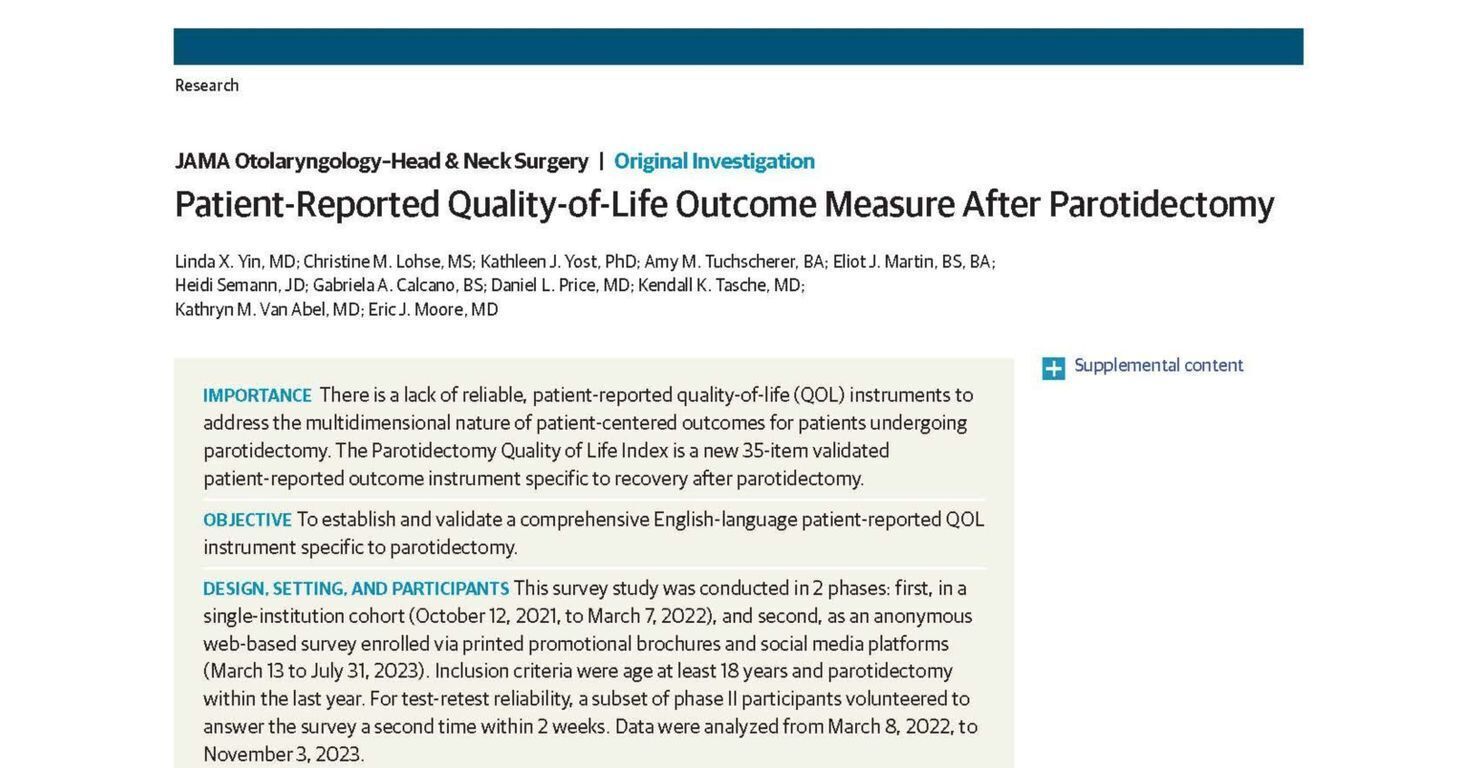


Introduction:
Welcome to this patient-friendly guide to help you understand parotid tumors. The parotid gland is one of the major salivary glands located near your ear, and sometimes tumors can develop in this area. In this tutorial, we will explore the causes of parotid tumors in a simple and easy-to-understand way.
Section 1: What is the Parotid Gland?
The parotid gland is a salivary gland responsible for producing saliva to aid in digestion. It is located on either side of your face, just in front of your ears. The saliva produced by the parotid gland travels through ducts and into your mouth, helping with chewing and swallowing.
Section 2: What are Parotid Tumors?
Parotid tumors are abnormal growths or masses that can develop in the parotid gland. These tumors can be either benign (non-cancerous) or malignant (cancerous). While most parotid tumors are benign, it's essential to understand their potential causes.
Section 3: Causes of Parotid Tumors
a. Genetic Factors:
- Some individuals may have a genetic predisposition to developing parotid tumors.
- If there is a family history of parotid tumors, it's essential to discuss this with your healthcare provider.
b. Radiation Exposure:
- Previous exposure to ionizing radiation, especially in the head and neck area, can increase the risk of parotid tumors.
- This may be due to previous radiation treatments for other medical conditions.
c. Age and Gender:
- Parotid tumors are more commonly found in older individuals.
- Women are more likely to develop parotid tumors than men.
d. Unknown Causes:
- In some cases, the exact cause of parotid tumors remains unknown.
- Regular check-ups and communication with your healthcare provider are crucial for early detection.
Section 4: Signs and Symptoms:
Understanding the signs and symptoms of parotid tumors is essential for early detection. If you experience any of the following, it's important to consult your healthcare provider:
- A lump or swelling in front of or just below your ear.
- Numbness or weakness on one side of your face.
- Pain or tenderness in the area of the parotid gland.
- Difficulty swallowing or opening your mouth wide.
Types of Parotid Tumors and Their Causes:
- Mucoepidermoid Carcinoma:
- Cause: Mucoepidermoid carcinoma is one of the most common malignant parotid tumors. It usually arises from the cells of the salivary glands and is often associated with genetic mutations.
- Adenoid Cystic Carcinoma:
- Cause: Adenoid cystic carcinoma is another malignant tumor that can occur in the parotid gland. It develops from the gland's ductal cells and tends to grow slowly. The exact cause is not well understood, but certain genetic factors may contribute.
- Acinic Cell Carcinoma:
- Cause: Acinic cell carcinoma is a rare type of cancerous tumor in the parotid gland. It typically originates from the acinar cells that produce saliva. The exact cause is not clear, but it may be associated with genetic mutations.
- Warthin's Tumor (Papillary Cystadenoma Lymphomatosum):
- Cause: Warthin's tumor is a benign parotid tumor, and its exact cause is not well understood. However, it is more commonly found in individuals who smoke.
- Pleomorphic Adenoma:
- Cause: Pleomorphic adenoma is a common benign parotid tumor. It arises from both the epithelial and myoepithelial cells of the salivary gland. The exact cause is not known, but it is believed to be associated with a combination of genetic and environmental factors.
- Monomorphic Adenoma:
- Cause: Monomorphic adenoma is another benign tumor of the parotid gland. It is characterized by a single cell type and is thought to develop from the ductal cells of the salivary gland. The exact cause is not well understood.
Conclusion: While the causes of parotid tumors can vary, early detection and communication with your healthcare provider are key. If you notice any unusual symptoms or have concerns about your parotid gland, don't hesitate to reach out to your healthcare team for guidance. Regular check-ups and a proactive approach to your health can contribute to successful outcomes.
Medical Review and Source Attribution
This information was provided by Eric J. Moore, M.D., a nationally and internationally recognized head and neck cancer specialist, thyroid cancer surgeon, and parotid tumor surgeon who has dedicated more than 30 years to advancing the care of patients with diseases of the head and neck. Dr. Moore serves as Chair of the Department of Otolaryngology-Head & Neck Surgery/Audiology at Mayo Clinic in Rochester, Minnesota.
Reference
1. Mayo Clinic. Eric J. Moore, M.D. Accessed September 23, 2026.
Medical Disclaimer
This article is for general educational purposes only and is not a substitute for professional medical advice, diagnosis, or treatment. Always seek guidance from a qualified healthcare professional about symptoms, medical conditions, or treatment decisions. If you believe you may have a medical emergency, seek immediate medical care.